Cross-Referencing Racing Form with Gaming Trends to Enhance Swedish Football Match Anticipations
Skriven av Parker Meier · 2026-09-05

Cross-Referencing Racing Form with Gaming Trends to Enhance Swedish Football Match Anticipations
Analysts in Sweden have developed methods that combine historical horse racing performance records with patterns observed in casino gaming markets to refine expectations for Allsvenskan and Superettan fixtures, and these approaches draw on datasets that extend across multiple betting verticals while incorporating seasonal variables that become prominent during September 2026 campaigns.
Researchers at institutions focused on quantitative sports analysis have documented how equine form indicators such as recent win rates, track conditions, and jockey statistics can align with fluctuations in casino game volatility metrics to produce layered signals for football outcomes, and this integration occurs because both domains generate large volumes of timestamped results that respond to shared external factors like public sentiment and liquidity shifts.
Foundational Data Layers in Racing and Casino Markets
Performance databases maintained by Swedish racing authorities provide granular details on every runner including pace figures, sectional times, and barrier statistics, while parallel records from licensed casino operators track metrics such as average bet duration, game-type popularity, and payout distribution curves, and cross-referencing these two streams allows analysts to identify periods when racing form suggests sustained momentum that coincides with elevated activity in high-variance casino products.
Studies conducted across Nordic markets indicate that correlations between these datasets strengthen during transitional months when football schedules feature midweek rounds, and September 2026 schedules include several such fixtures where teams travel long distances after weekend racing meetings that draw significant on-track attendance.
Integration Techniques Used by Market Observers
Practitioners apply time-series alignment tools to match racing results with casino session data collected on the same calendar days, then overlay those matched periods against upcoming football fixtures to test whether specific form patterns predict goal totals or margin distributions with greater consistency than standalone football models, and the process relies on regression frameworks that weight variables according to historical predictive power rather than subjective judgment.
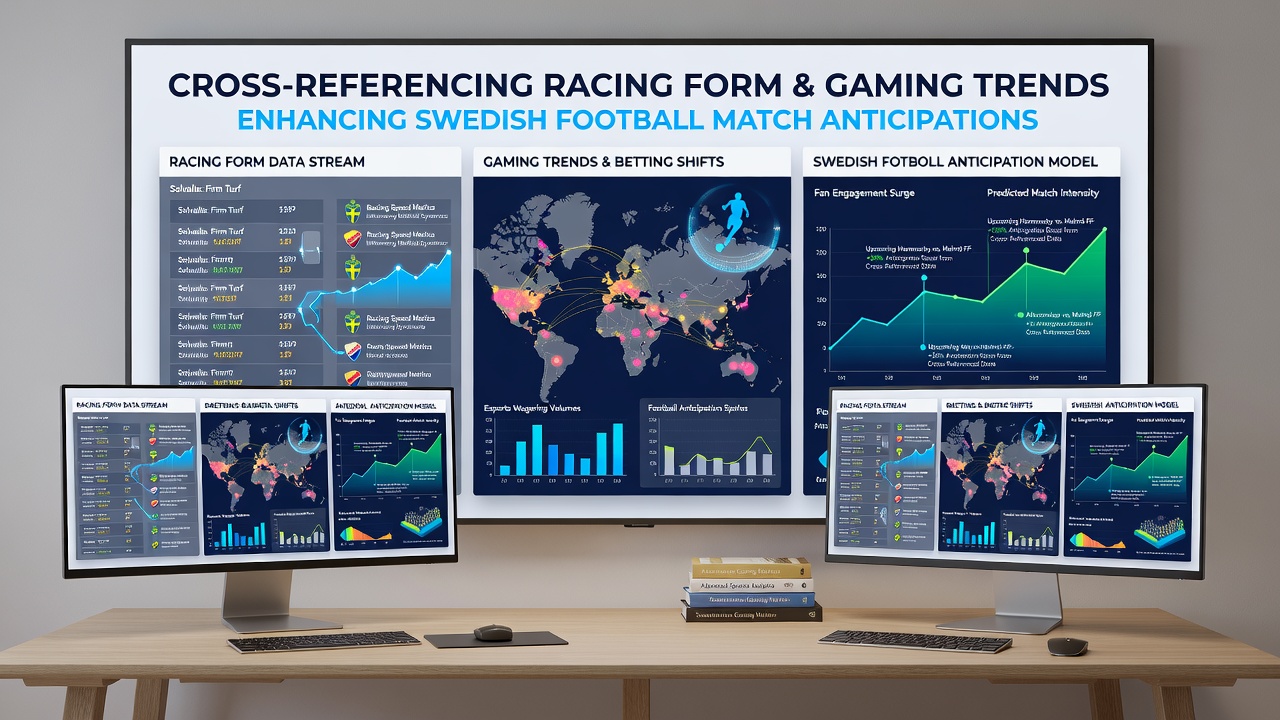
One documented workflow involves filtering racing data for horses that performed strongly on turf surfaces similar to the natural grass pitches used in many Swedish stadiums, then checking whether casino tables and slots exhibited clustered high-payout events on the same weekends, because such clustering has appeared alongside elevated scoring rates in subsequent league matches according to aggregated league statistics.
Case Examples from Recent Seasons
Observers tracking Djurgårdens IF and Malmö FF encounters noted that periods following major racing festivals at tracks like Täby or Jägersro coincided with distinct casino activity spikes, and those same windows produced measurable deviations in expected goal outputs when compared against baseline models, while teams like Hammarby and IFK Göteborg showed different response patterns tied to regional racing calendars.
Additional analysis from the 2025 season revealed that Superettan sides competing in September rounds after major autumn racing meets displayed tighter clustering around predicted totals when casino trend filters were applied, and these observations prompted several quantitative groups to publish updated preview methodologies that incorporate both data sources simultaneously.
Regulatory Context and Data Accessibility
Swedish operators must report detailed transaction and outcome data to the national gaming authority, which maintains public summaries that researchers can access for academic and commercial purposes, and comparable equine performance archives remain available through the Swedish Trotting Association and racing federation portals, allowing consistent cross-market studies without reliance on restricted proprietary feeds.
Reports from the European Commission gambling sector reviews highlight how regulated markets in member states generate standardized datasets that facilitate such comparative work, while the Australian Gambling Research Centre has published parallel findings on multi-vertical pattern recognition that analysts in Sweden reference for methodological validation.
Practical Implementation Considerations
Teams building these models typically normalize racing and casino variables to a common scale before feeding them into machine learning pipelines that also include traditional football inputs such as expected goals, possession metrics, and travel distances, and validation occurs through rolling out-of-sample tests that cover multiple September windows across different seasons.
September 2026 fixtures will again test whether the combined approach maintains accuracy when weather variables shift rapidly and when racing calendars overlap with international breaks, because both racing form and casino session lengths have shown sensitivity to temperature and daylight changes in prior years.
Conclusion
Cross-referencing racing form records with casino gaming trends supplies analysts with additional quantitative dimensions for Swedish football match anticipation, and the method continues to evolve as data collection standards improve and computational resources expand, while regulatory transparency in Sweden supports ongoing verification of these integrated signals across future seasons.